
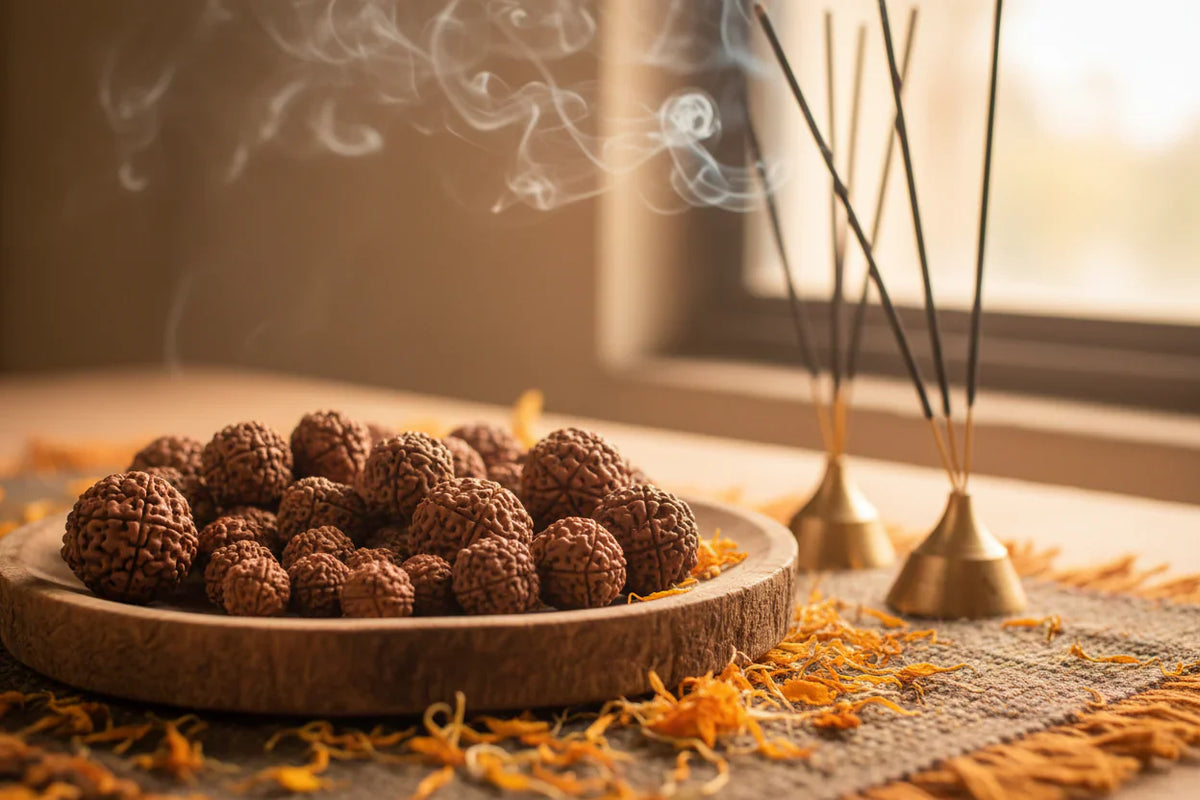
If you've stumbled upon the word "rudraksha" while exploring meditation practices or browsing spiritual jewelry, you're probably wondering what these distinctive beads actually are. Maybe you've seen them worn by yoga practitioners, noticed them in meditation studios, or heard friends mention their spiritual significance. You're in the right place to get clear, honest answers.
Rudraksha beads are sacred seeds that come from a specific tree found primarily in the Himalayan regions. For thousands of years, people across various spiritual traditions have worn these naturally formed beads for meditation, spiritual growth, and personal well-being. But there's so much more to understand about what makes these beads special—and why they've captivated people's attention for millennia.
Understanding Rudraksha: The Sacred Seed That Connects Spirituality and Nature
The Simple Definition of Rudraksha
Rudraksha is a seed that grows on the Rudraksha tree (Elaeocarpus ganitrus), found mainly in the Himalayan region, parts of Southeast Asia, and Indonesia. The name "rudraksha" comes from two Sanskrit words: "Rudra" (another name for Lord Shiva) and "aksha" (meaning teardrops or eyes). These naturally occurring seeds have distinct lines or facets running along their surface, which are called "mukhis." People wear these beads as single pieces, in bracelets, or strung together as malas (prayer necklaces) for meditation and spiritual practices.
Why Rudraksha Matters in Today's World
You might wonder why an ancient spiritual object still holds relevance today. In our fast-paced, stress-filled modern lives, many people are turning to traditional practices for grounding and inner peace. Rudraksha represents a tangible connection to nature and spiritual tradition—something real you can hold and wear as a reminder of your intentions. Whether you approach it from a spiritual perspective or simply appreciate it as a meaningful natural artifact, rudraksha bridges the gap between ancient wisdom and contemporary wellness practices.

The Fascinating Story Behind Rudraksha: Mythology Meets History
The Ancient Legend of Shiva's Tears
The story goes that Lord Shiva, one of the principal deities in Hinduism, meditated for thousands of years for the well-being of all living beings. When he finally opened his eyes, tears of compassion fell to the earth. Where these divine tears touched the ground, rudraksha trees sprouted, bearing seeds imbued with spiritual power. This beautiful legend explains why rudraksha beads are considered sacred—they're literally viewed as crystallized divine compassion.
Different regional traditions tell variations of this story. Some say Shiva's tears fell after witnessing the suffering of humanity. Others describe them as tears of joy at the beauty of creation. Whether you view this as mythology or spiritual truth, the story reveals how deeply rudraksha is woven into devotional practice. The legend emphasizes qualities like compassion, meditation, and the connection between the divine and natural world.
Historical Evidence and Archaeological Findings
Beyond mythology, archaeological evidence shows that rudraksha beads have been used for at least 2,000 years. Ancient texts like the Shiva Purana and Padma Purana, dated between 1000-1400 CE, contain detailed descriptions of rudraksha beads and their spiritual significance. However, the practice of wearing these beads likely predates these written records by centuries.
Archaeologists have discovered rudraksha beads at excavation sites across South and Southeast Asia, often in contexts suggesting ritual or spiritual use. Historical records show that rudraksha was highly valued in ancient trade routes, sometimes commanding prices comparable to precious gems. This isn't just Hindu tradition—rudraksha beads appear in Buddhist practices, particularly in Tibetan Buddhism, where they're used as mala beads for mantra recitation.
Rudraksha Across Different Spiritual Traditions
While rudraksha has its strongest roots in Hindu Shaivite traditions, its use extends far beyond. Buddhist practitioners, particularly in Nepal and Tibet, have long used rudraksha malas for meditation and prayer. The beads appear in Sikh traditions as well, where they're worn by some practitioners as reminders of spiritual devotion.
What's particularly interesting is how rudraksha has transcended religious boundaries in recent decades. People from various backgrounds—or no religious background at all—wear rudraksha for meditation, mindfulness practices, or simply as meaningful jewelry. This universalization doesn't diminish its traditional significance; rather, it shows how certain spiritual tools can serve people across diverse belief systems.
The Rudraksha Tree: Botanical Wonder of the Himalayas
Scientific Classification: Elaeocarpus Ganitrus
Let's talk about where these sacred beads actually come from. The rudraksha tree belongs to the family Elaeocarpaceae and is scientifically known as Elaeocarpus ganitrus. It's a large evergreen tree that can reach heights of 60-80 feet (about as tall as a 6-8 story building). The tree has broad, dark green leaves and produces small white flowers that eventually develop into the blue, olive-like fruits containing the rudraksha seeds we know.
The tree itself is quite beautiful and can live for several decades, sometimes over a hundred years. During the fruiting season—typically from November to March—the trees bear clusters of blue fruits. Inside each fruit is the hard, woody seed we call rudraksha. The outer blue flesh is removed, and the inner seed is cleaned and dried, revealing the characteristic mukhi lines that make each bead unique.
Where Rudraksha Trees Grow: Geography and Climate
Rudraksha trees thrive in specific climatic conditions. The primary growing regions are the Himalayan foothills of Nepal, certain areas of northern India (particularly Uttarakhand and Himachal Pradesh), and parts of Indonesia (especially Java and Sumatra). Smaller populations exist in Myanmar, Thailand, and other Southeast Asian countries.
These trees prefer subtropical to tropical climates with good rainfall and well-drained soil. They typically grow at elevations between 500 and 3,000 meters (1,600 to 9,800 feet). The Nepali rudraksha, grown at higher altitudes, are particularly prized for their larger size and more pronounced mukhi lines. Indonesian rudraksha tend to be slightly smaller but are more readily available and generally less expensive.
The geographic origin matters because it affects the bead's characteristics—size, color, and the depth of mukhi lines. Nepali beads typically have a richer brown color and deeper grooves, while Indonesian beads may be lighter in color with slightly less pronounced lines.
The Journey from Tree to Sacred Bead
Understanding how rudraksha goes from tree to finished bead helps you appreciate these natural objects even more. The process begins when the blue fruits ripen and fall naturally from the tree, or are carefully harvested by hand. Traditional harvesting respects the tree's natural cycles and avoids damaging branches or forcing unripe fruits.
After collection, the outer fruit pulp is removed—this can be done manually or through a natural decomposition process where the fruits are left to decompose in controlled conditions. Once the pulp is gone, the hard seeds are washed and cleaned multiple times. The beads are then dried naturally in the shade, never in direct harsh sunlight, which could cause cracking.
After drying, each bead is examined and sorted based on its mukhi count, size, shape, and overall quality. Premium beads with clear, well-defined mukhis and good symmetry are separated from those with irregular shapes or unclear facets. The entire process, from harvest to finished bead, can take several weeks and requires careful handling to preserve the natural integrity of the seeds.
Sustainability and Ethical Harvesting Concerns
Here's something worth thinking about: the growing demand for rudraksha has raised environmental concerns. Some regions have experienced over-harvesting, threatening local rudraksha tree populations. Unscrupulous collectors sometimes damage trees or harvest unripe fruits, which harms both the tree and the quality of beads.
Responsible suppliers now emphasize sustainable harvesting practices. This includes collecting only naturally fallen fruits, maintaining tree health through proper care, and replanting programs to ensure future availability. Some organizations in Nepal and India are working on rudraksha conservation projects, creating protected groves and educating local communities about sustainable practices.
When you purchase rudraksha, asking about sourcing and sustainability isn't just environmentally conscious—it's also part of respecting the spiritual tradition that values these trees as sacred. Ethically sourced beads ensure that this practice can continue for future generations while supporting local communities who depend on rudraksha harvesting for their livelihoods.
Types of Rudraksha: Understanding the Mukhi System
What Are Mukhis? The Natural Facets Explained
If you look closely at a rudraksha bead, you'll notice natural lines or grooves running from one end to the other. These lines are called "mukhis" (meaning "faces" in Sanskrit) or facets. Think of mukhis as the natural divisions in the seed—they're formed as the seed develops inside the fruit, creating distinct compartments.
The number of mukhis on a bead can range from 1 to 21, though some types are extremely rare. Here's what's important: the mukhi count isn't something artificially created or carved. It's a natural characteristic of how that particular seed formed. Each bead naturally develops a certain number of compartments, which we see externally as mukhi lines.
In traditional belief systems, different mukhi types are associated with different energies, planetary influences, and benefits. A 5-mukhi might be associated with overall balance and health, while a 6-mukhi is traditionally linked to wisdom and learning. Whether you connect with these traditional associations or simply find the classification system interesting, understanding mukhis helps you navigate the world of rudraksha.
One Mukhi to Twenty-One Mukhi: Complete Overview
Let me walk you through the different types:
1-Mukhi (One Face): The rarest and most sought-after type. Naturally round or half-moon shaped. Traditionally associated with supreme consciousness and enlightenment. Extremely expensive and difficult to authenticate—most "1-mukhi" beads in the market are fake.
2-Mukhi (Two Faces): Represents unity and harmony. Traditionally worn for improving relationships and emotional balance.
3-Mukhi (Three Faces): Associated with fire element and overcoming past influences. Said to help with self-confidence and releasing guilt.
4-Mukhi (Four Faces): Linked to creativity and knowledge. Often recommended for students and creative professionals.
5-Mukhi (Five Faces): The most common type, representing Lord Shiva. Considered universally beneficial for health, peace, and awareness. Best choice for beginners.
6-Mukhi (Six Faces): Associated with wisdom, learning, and emotional stability. Good for students and those seeking knowledge.
7-Mukhi (Seven Faces): Traditionally linked to abundance and good fortune. Often recommended for those facing financial difficulties.
8-Mukhi (Eight Faces): Associated with removing obstacles and new beginnings. Traditionally worn for success in endeavors.
9-Mukhi (Nine Faces): Linked to courage and fearlessness. Said to provide protection and strength.
10-Mukhi (Ten Faces): Associated with protection and grounding. Traditionally believed to shield from negative energies.
11-Mukhi (Eleven Faces): Linked to wisdom and meditation. Often worn by spiritual seekers.
12-Mukhi (Twelve Faces): Associated with vitality and leadership qualities.
13-Mukhi (Thirteen Faces): Rare type linked to charm and attraction.
14-Mukhi (Fourteen Faces): One of the most powerful types, associated with intuition and wisdom.
15-21 Mukhi: These are extremely rare and command very high prices. Often difficult to verify authenticity.
Gauri Shankar: A naturally joined pair of rudraksha beads, representing divine union. Highly prized and rare.
Most Common Types for Beginners
If you're just starting out, don't feel overwhelmed by all these options. The 5-mukhi rudraksha is universally recommended for beginners—it's abundant, affordable, easier to authenticate, and considered suitable for everyone regardless of age, gender, or background.
After the 5-mukhi, the 6-mukhi and 7-mukhi are also good starter options. They're relatively common, reasonably priced, and well-regarded in tradition. I'd suggest avoiding the temptation to immediately purchase rare types like 1-mukhi or Gauri Shankar as a beginner. These rare beads are expensive, frequently counterfeited, and require expertise to authenticate. Start simple, get familiar with what genuine rudraksha looks and feels like, and then explore other types if you're drawn to them.
Spiritual Significance and Traditional Beliefs About Rudraksha
Connection to Chakras and Energy Centers
In yogic and tantric traditions, rudraksha beads are believed to interact with the body's energy system, particularly the chakras. Chakras are conceptualized as energy centers running along the spine, each associated with different physical, emotional, and spiritual functions.
Different mukhi types are traditionally associated with different chakras. For example, a 4-mukhi might be linked to the heart chakra (Anahata), supporting emotional balance and compassion. A 5-mukhi is often associated with overall chakra alignment, which is why it's considered universally beneficial. The 7-mukhi might connect to the solar plexus chakra (Manipura), relating to personal power and confidence.
Whether you experience this energetically or view it as symbolic, wearing rudraksha during meditation can serve as a focal point for intention and awareness. Many practitioners report feeling more centered or grounded when wearing their beads during spiritual practices, though it's worth noting that such experiences are subjective and personal.
Role in Meditation and Mantra Practice
Rudraksha malas (strings of 108 beads) have been used for centuries as tools for counting mantras during meditation. The practice is straightforward: you hold the mala in your right hand, using your thumb to move from one bead to the next as you repeat your chosen mantra. The 108 beads provide a natural counting mechanism, allowing you to focus on the practice rather than tracking numbers mentally.
The physical sensation of moving from bead to bead creates a tactile anchor during meditation. This can be particularly helpful if your mind tends to wander—the touch of each bead brings you back to the present moment and your practice. Some practitioners believe rudraksha's natural texture and the slight variation between beads enhances this anchoring effect compared to smooth, uniform materials.
Traditional practitioners often energize their rudraksha through specific rituals before first use, though this isn't universally required. Simple practices might include washing the beads, offering prayers, or wearing them during personal meditation to attune them to your energy. Modern practitioners often skip elaborate rituals, focusing instead on using the beads consistently in their practice.
Rudraksha in Ayurveda and Holistic Healing
In Ayurveda, India's traditional system of medicine, rudraksha is classified as having specific healing properties. Ayurvedic texts describe rudraksha as having a cooling effect on the body and mind, potentially supporting stress reduction and mental clarity. Some Ayurvedic practitioners recommend wearing rudraksha for conditions related to excess heat or "pitta" imbalance in the body.
Traditional Ayurvedic preparation sometimes involves boiling rudraksha in water to create a medicinal decoction, though this practice is less common today. More typically, rudraksha is worn directly against the skin, where it's believed to influence the wearer's electromagnetic field and promote balance.
It's important to understand that while Ayurveda is a sophisticated traditional system with thousands of years of practice, many of its claims about specific remedies haven't been verified through modern scientific research. Approach these traditional perspectives with respect for their cultural context while maintaining realistic expectations about measurable health effects.
Benefits of Wearing Rudraksha: What Science and Tradition Say
Traditional Spiritual Benefits
Let's be clear about what tradition says versus what we can verify. Traditional texts and practitioners attribute numerous benefits to wearing rudraksha:
Mental and Emotional: Enhanced concentration, reduced stress and anxiety, improved meditation depth, mental clarity, emotional stability, and peaceful sleep. Many practitioners report feeling calmer and more centered when wearing their beads regularly.
Spiritual: Deepened spiritual awareness, protection from negative energies, enhanced intuition, support for mantra practice, and progress on the spiritual path. These benefits are experiential and personal, varying significantly among individuals.
Physical: Traditional claims include support for heart health, blood pressure regulation, pain relief, and overall vitality. Some Ayurvedic practitioners suggest rudraksha may influence the nervous system beneficially.
Protection: Perhaps the most common traditional belief is that rudraksha provides spiritual protection—shielding the wearer from negative influences, harmful energies, or even physical dangers.
It's crucial to understand that these traditional benefits are based on centuries of anecdotal experience and spiritual texts, not controlled scientific studies. Many people genuinely report positive experiences, but attribution is complex—benefits might come from the meditation practice itself, the placebo effect, increased mindfulness, or other factors beyond the beads themselves.
Physical and Mental Health Claims
Various sources claim rudraksha can help with specific health conditions—from high blood pressure to diabetes, from anxiety to insomnia. Let me be straightforward: while traditional medicine systems have long recognized rudraksha's potential benefits, modern medical science hasn't thoroughly studied these claims.
Some practitioners suggest that rudraksha's dielectric properties (its ability to store electrical energy) might influence the body's electromagnetic field. The idea is that wearing rudraksha against the skin creates subtle effects on nerve impulses and stress responses. While this is an interesting hypothesis, rigorous scientific validation is lacking.
What we can say with more confidence is that wearing rudraksha as part of a regular meditation or mindfulness practice likely contributes to the well-established benefits of those practices themselves—reduced stress, improved focus, better emotional regulation, and enhanced overall well-being. Whether the beads themselves add anything beyond these general meditation benefits remains an open question.
What Modern Research Reveals
Scientific research on rudraksha is limited but growing. A few studies have examined rudraksha's physical and chemical properties. Research published in peer-reviewed journals has analyzed rudraksha's composition, finding various compounds with potential biological activity. Some preliminary studies suggest possible anti-inflammatory or antimicrobial properties of rudraksha extracts.
However—and this is important—most existing research focuses on rudraksha extracts or powders in laboratory conditions, not on the effects of wearing whole beads. The leap from "laboratory studies show certain compounds in rudraksha have biological activity" to "wearing rudraksha beads provides specific health benefits" is significant and not well-supported by current evidence.
One area of interest is rudraksha's dielectric properties. Some researchers have measured these properties and theorized about potential bioelectric effects, but controlled studies on actual health outcomes are needed. The scientific community generally maintains a cautious, "needs more research" stance on rudraksha's specific benefits.
Setting Realistic Expectations
Here's my honest take: rudraksha beads are beautiful natural objects with deep cultural and spiritual significance. If you wear them as part of a mindful spiritual practice, you may well experience benefits—but those benefits likely come from your overall practice, intention, and mindfulness rather than magical properties of the beads themselves.
Don't expect rudraksha to cure diseases, solve all your problems, or dramatically transform your life overnight. They're not miracle objects, despite what some sellers might claim. If you have health concerns, consult medical professionals—wearing rudraksha should complement, not replace, appropriate medical care.
That said, if wearing rudraksha helps you maintain a regular meditation practice, serves as a meaningful reminder of your intentions, or simply brings you a sense of connection to something larger, those are real and valuable benefits. Approach rudraksha with open-minded curiosity rather than either blind belief or dismissive skepticism, and let your own experience guide you.

How to Identify Authentic Rudraksha: The Ultimate Verification Guide
Why Authentication Matters: The Counterfeit Problem
Let's talk about an uncomfortable truth: a huge portion of rudraksha beads in the commercial market are fake. Estimates suggest 60-70% of beads sold online and in general retail shops are counterfeit. This isn't just disappointing—it's a significant financial and spiritual concern for buyers.
Fake rudraksha comes in many forms: wood beads with carved lines, plastic or resin replicas, wild berry seeds that resemble rudraksha, and even manipulated genuine beads (where the mukhi count has been artificially altered). The counterfeit industry exists because genuine rudraksha—especially rare types—commands high prices. A real 1-mukhi can cost hundreds or even thousands of dollars, while a fake costs a few cents to produce.
Beyond the financial aspect, wearing fake beads defeats the purpose if you're seeking the traditional or spiritual benefits associated with genuine rudraksha. If authenticity matters to you—whether for spiritual reasons or simply because you want what you're paying for—learning authentication is essential.
The Water Test: Does It Really Work?
You've probably heard about the famous water test: "Real rudraksha sinks; fake floats." This test is widely mentioned online and in shops, but here's the truth—it's unreliable and shouldn't be your primary authentication method.
Why the water test fails: Aged, properly dried genuine rudraksha beads may float because they've lost moisture over time. Conversely, some fake beads made from dense wood or resin also sink. Buoyancy depends on density, moisture content, and size—none of which are definitive indicators of authenticity.
If you want to try the water test, place your bead in room-temperature water. If it sinks immediately, that's a possible positive indicator (but not proof). If it floats, that doesn't necessarily mean it's fake—it might just be well-dried or aged. Use this test only as one small piece of evidence among many, never as your sole verification method.
Physical Characteristics of Genuine Rudraksha
Real authentication relies on careful physical examination. Here's what to look for:
Deep, Natural Mukhi Lines: Genuine rudraksha has deeply grooved lines running continuously from top to bottom. These grooves should feel substantial when you run your fingernail along them—not shallow or superficial. The lines create natural compartments (you can sometimes see these clearly if you look at the bead's ends). Fake beads often have carved or painted lines that don't run all the way through or are inconsistent in depth.
Woody Texture: Real rudraksha has a distinctive woody, slightly rough texture. Run your fingers over the surface—it should feel natural and organic, with visible pores and slight irregularities. Fakes are often too smooth, too uniformly polished, or have an artificial feel (plastic-like or too perfectly finished).
Natural Irregularity: No two genuine rudraksha beads are exactly alike. They vary in shape (slightly oval, round, or oblong), size, and even color. If you're looking at a batch of beads that all look perfectly identical, that's a red flag. Nature doesn't produce uniformity.
Bore Hole Characteristics: Look carefully through the central hole. Genuine beads show irregular boring with visible wood grain and natural texture. The hole might not be perfectly centered or perfectly round. Fake beads often have machine-drilled holes that are too perfect and smooth.
Weight and Density: Genuine rudraksha has a characteristic weight-to-size ratio. It should feel substantial—woody and solid, not lightweight or hollow-feeling. With experience handling real beads, you'll develop a sense for the right weight.
Color Variations: Authentic rudraksha ranges from light tan/brown to dark chocolate brown, often with natural color variations on a single bead. Beads that are unnaturally dark, uniformly colored, or show signs of staining/painting are suspicious.
Advanced Testing Methods You Can Do at Home
Detailed Visual Inspection:
- Get a magnifying glass or jeweler's loupe (10x magnification)
- Examine each mukhi line closely—follow it from top to bottom
- Look for natural wood grain, pores, and imperfections
- Check for signs of carving, tool marks, or artificial manipulation
- Verify the mukhi lines create actual compartments, not just surface grooves
The Compartment Count Test:
- Look at both ends (top and bottom) of the bead
- Count the natural divisions you can see
- The internal compartments should match the external mukhi lines
- If you see 5 external lines but can't identify 5 internal compartments, that's concerning
Comparison Method:
- If possible, examine your bead alongside a certified authentic rudraksha
- Compare texture, mukhi depth, color, weight, and overall appearance
- Side-by-side comparison reveals differences that aren't obvious when examining beads in isolation
Tactile Assessment:
- Roll the bead between your fingers
- Feel the mukhi grooves—they should be consistently deep along their entire length
- Press gently on different areas—genuine beads are uniformly hard (wood), not softer in some spots
What Professional Testing Involves
For expensive or rare rudraksha (especially 1-mukhi, Gauri Shankar, or other high-value types), professional authentication is worth the investment.
X-Ray Testing: The most reliable method. X-ray imaging reveals the internal structure of the bead, showing the natural compartments clearly. Genuine rudraksha displays distinct internal chambers matching the external mukhi count. Fake beads show solid interiors or artificially created chambers. Many reputable dealers in Nepal and India offer X-ray authentication services.
CT Scan: Even more detailed than X-ray, CT scanning creates a 3D visualization of the bead's internal structure. This is the gold standard for authentication but is more expensive. It's typically reserved for very high-value beads.
Laboratory Certification: Some specialized gemological laboratories offer rudraksha authentication services. They provide detailed analysis and certification documents. However, be aware that certificates themselves can be forged, so verify the testing lab's reputation independently.
Common Fake Rudraksha Types and Red Flags
Carved Wood Beads: The most common fakes. Regular wood (often from other seeds or carved wooden beads) with artificial mukhi lines carved into them. Red flags: Shallow, inconsistent lines; wrong texture; suspiciously uniform appearance; lighter weight.
Plastic or Resin Replicas: Molded to look like rudraksha, sometimes painted for aging effect. Red flags: Unnatural feel; too light or sometimes too heavy; perfectly uniform; artificial shine; no natural wood characteristics.
Bhadraksha (Wild Berry Seeds): Natural seeds that somewhat resemble rudraksha but are from different plants. Red flags: Different surface texture; mukhi lines don't have the same depth; internal structure different when examined closely.
Areca Nut Modifications: Betel nut (areca nut) carved to look like rudraksha. Red flags: Different density; artificial mukhi lines; distinct boring pattern; often artificially darkened.
Manipulated Genuine Rudraksha: Real rudraksha beads that have been altered (lines added or removed) to change the mukhi count. Red flags: Inconsistent groove depth; signs of carving or manipulation; some lines appear natural while others look artificial.
Red Flags When Buying
Price Too Good to Be True: If someone is selling 1-mukhi beads for $20 or large Gauri Shankar for $50, they're almost certainly fake. Genuine rare types command high prices because they're genuinely rare.
Seller Lacks Transparency: Reputable sellers provide detailed photos, answer questions thoroughly, offer authentication guarantees, and have clear return policies. Sellers who dodge questions, refuse additional photos, or can't explain their sourcing are suspicious.
Exaggerated Claims: Be wary of sellers making outrageous promises—"guaranteed to cure diseases," "miracle beads," "100% guaranteed results." These are red flags for dishonest marketing.
No Clear Origin Information: Vague descriptions like "from the Himalayas" without specific sourcing information are concerning. Reputable sellers can tell you specifically where their beads come from.
Stock Photos Only: If the seller uses the same generic photos for all their listings or won't provide photos of the actual bead you'll receive, that's a major red flag.
Pressure Tactics: "Limited time offer," "only 2 left," "special discount ending tonight"—these high-pressure sales tactics are often used to push fake products.
First-Time Buyer's Checklist
✓ Start with common types (5-mukhi) from reputable sources ✓ Request detailed, clear photos of the actual bead, including close-ups of mukhi lines ✓ Check seller reviews and reputation from multiple sources ✓ Ask about return policy and authentication guarantee ✓ Verify reasonable pricing (not suspiciously cheap, not unnecessarily expensive) ✓ Look for educational content from the seller (shows expertise, not just sales focus) ✓ Request information about sourcing (Nepal, Indonesia, specific regions) ✓ If buying expensive/rare types, insist on X-ray certification from reputable lab ✓ Trust your instincts—if something feels off, investigate further or walk away ✓ Consider buying in person if possible, so you can physically examine before purchasing
Authentication takes practice and patience, but it's worth the effort. As you become more familiar with genuine rudraksha characteristics, you'll develop an intuitive sense for what's real. Don't be discouraged if it seems overwhelming at first—every expert started as a beginner learning to tell the difference.
Can You Wear Multiple Rudraksha Beads Together? Clearing the Confusion
If you've searched for this question online, you've probably noticed something frustrating: different sources give completely opposite advice. Some websites insist you should never combine different mukhi types. Others say it's perfectly fine. Some claim only certain combinations work, while a few declare that all traditional rules are outdated. So what's the truth? Let's cut through the confusion with a balanced look at both traditional guidelines and modern practices.
The Traditional Viewpoint on Combining Rudraksha
In traditional Vedic practice, wearing multiple rudraksha beads together follows specific guidelines rooted in ancient texts and spiritual principles. The traditional perspective emphasizes that different mukhi types carry distinct energies associated with different planetary influences and deities. According to these teachings, certain combinations harmonize well—like pairing a 5-mukhi (associated with Shiva) with a 6-mukhi (associated with Kartikeya, Shiva's son). However, traditional practitioners caution against randomly combining beads without understanding their energetic properties.
Classical texts suggest that conflicting planetary energies might create imbalance. For instance, some traditional guides warn against combining beads associated with enemy planets in Vedic astrology. The underlying philosophy is that rudraksha beads are not just decorative items but spiritual tools with specific vibrations. Traditional practitioners often consult with knowledgeable guides or astrologers before creating combinations, especially when wearing a mala of mixed types.
The traditional approach values intentionality—each bead should serve a specific purpose in your spiritual practice, and combinations should be thoughtfully chosen rather than arbitrary. Many traditional sources provide detailed compatibility charts showing which mukhi types work well together and which should be avoided.
Modern Interpretations and Practices
Contemporary practitioners and many spiritual teachers take a more flexible approach to combining rudraksha beads. The modern perspective emphasizes personal intention, intuition, and individual experience over strict traditional rules. Many current teachers point out that millions of people worldwide wear mixed-mukhi malas without reported negative effects.
The modern view suggests that if rudraksha beads truly carry universal spiritual energy, that energy is inherently beneficial and harmonizing—not conflicting. Some practitioners argue that the synergy of multiple types might actually enhance the overall spiritual effect, creating a more complete energetic experience rather than causing problems.
Scientific-minded individuals note that there's no empirical evidence proving that specific combinations cause harm or imbalance. From this perspective, the benefits of rudraksha may be more related to mindfulness, meditation practice, and personal belief than to specific "planetary energies." If wearing certain beads together helps your practice and feels right to you, that's what matters.
Modern teachers often emphasize that your intention and the respect with which you wear the beads matters more than following complex combination rules. They suggest listening to your own experience—if wearing a particular combination feels right and supports your practice, that's your answer.
Step-by-Step Guide to Creating Your Personal Combination
Step 1: Define Your Intention Before choosing beads, clarify why you want to wear rudraksha. Are you seeking support for meditation? Emotional balance? A connection to spiritual tradition? Stress relief? Your intention guides your choices more than any rule book. Write down your specific goals if that helps clarify your thinking.
Step 2: Research Individual Mukhi Types Learn about the traditional associations and benefits attributed to different mukhi types. The 5-mukhi is considered balancing and suitable for everyone. The 6-mukhi is associated with wisdom and learning. The 7-mukhi relates to abundance and health. The 4-mukhi supports creativity and knowledge. Choose types that align with your intentions from Step 1.
Step 3: Start Simple If you're new to rudraksha, begin with a single-type mala (typically 5-mukhi) or a simple combination of 2-3 types maximum. You can always expand later as you gain experience and understanding of what works for you. There's no rush to create a complex combination immediately. Simplicity often serves beginners better than complexity.
Step 4: Consider a Focal Bead Many practitioners use a single special mukhi type (like 1-mukhi, Gauri Shankar, or 14-mukhi) as the central "guru bead" in a mala of more common beads (usually 5-mukhi). This creates a focal point while maintaining accessibility and affordability. The guru bead represents your primary intention while the other beads provide supporting energy.
Step 5: If Following Traditional Rules If traditional guidelines are important to you, consult these common principles:
- Odd-numbered mukhis (1, 3, 5, 7, 9, 11, 13) often pair well together
- Even-numbered mukhis (2, 4, 6, 8, 10, 12, 14) complement each other
- Pairing beads associated with friendly deities or planets in Vedic astrology
- Avoiding combinations of beads associated with conflicting planets
- Consulting with a knowledgeable practitioner or Vedic astrologer for personalized guidance
- Using traditional compatibility charts as reference
Step 6: If Taking a Modern Approach If you prefer flexibility and personal intuition:
- Choose beads that intuitively appeal to you when you see or hold them
- Select based on your personal goals without worrying about traditional restrictions
- Mix types that represent different aspects of your spiritual journey or life goals
- Trust your own experience and feelings about what resonates
- Let your meditation practice and daily experience guide adjustments
- Focus on your intention and mindfulness rather than external rules
Step 7: Wear and Observe Wear your chosen combination consistently for at least 30-40 days (a traditional minimum period for energetic attunement). Pay attention to how you feel physically, emotionally, and spiritually. Keep a simple journal if helpful: note your meditation quality, stress levels, emotional state, and any other relevant observations. Your own experience is the best guide—better than any book or authority.
Step 8: Adjust as Needed Your needs may change over time, and that's perfectly natural. Life circumstances evolve, spiritual practices deepen or shift, and personal priorities change. It's acceptable to modify your combination, add beads, remove beads, or switch to a different type entirely based on evolving intentions and experiences. Flexibility and responsiveness to your own journey matter more than rigid adherence to an initial choice.
What Experts Actually Recommend
After researching traditional sources and speaking with contemporary practitioners, here's what most experts across both camps agree on:
Universal Agreement Points:
- Genuineness matters most—whether you wear one type or multiple types, ensure your beads are authentic
- Intention and respect are paramount—approach rudraksha as sacred objects deserving care and reverence
- Consistency matters more than combination—regular practice with any authentic rudraksha is more beneficial than sporadic use of the "perfect" combination
- Personal experience trumps theory—your own observations over time are more valuable than rigid adherence to rules you don't understand
- Start simple, expand thoughtfully—beginning with well-known, safe combinations (like 5-mukhi dominant) provides a stable foundation
Where Experts Diverge: Traditional authorities emphasize following established guidelines and consulting knowledgeable practitioners. Modern teachers emphasize personal empowerment and individual experience. Both perspectives have merit and have served practitioners well. Neither approach is objectively "right" or "wrong."
Clear Takeaway
So can you wear multiple rudraksha beads together? The answer depends on your perspective and approach to spiritual practice.
If you value traditional wisdom and want to honor ancient practices, following established combination guidelines provides a structured, time-tested path. This approach respects the accumulated knowledge of centuries and connects you to a long lineage of practitioners. There's beauty and depth in traditional practice.
If you prefer a more intuitive, personal approach, trusting your own experience and intention can be equally valid. This approach acknowledges that spiritual experience is ultimately individual and that rigid rules might not serve everyone equally. There's empowerment and authenticity in following your own path.
The most important factors are: wearing genuine rudraksha beads, maintaining them with respect, and using them to support your spiritual or meditative practice—however you define it. Whether you follow traditional rules strictly, adopt them loosely, or create your own combinations based on personal resonance, the key is consistency, intention, and respect for the practice.
There's no single "right" answer, and that's actually the beauty of it. Your practice is yours to define.
Bottom line: Both traditional and modern approaches have merit. Choose the path that resonates with your beliefs, start simple, observe your experience, and adjust accordingly. The power of rudraksha lies not in perfect combinations but in mindful, respectful practice.
Choosing and Caring for Your Rudraksha: A Practical Guide
First-Time Buyer's Checklist
Making your first rudraksha purchase can feel overwhelming, but these practical guidelines will help you make a confident, informed decision:
Research Before Buying: Spend time understanding what rudraksha is, the different types available, and realistic pricing for authentic beads. Knowledge is your best protection against scams.
Choose Reputable Sellers: Look for established sellers with physical locations, positive reviews from multiple sources, clear return policies, and willingness to answer questions thoroughly. Online marketplaces with anonymous sellers are riskier.
Start with Common Types: Begin with 5-mukhi beads, which are affordable, widely available, easier to authenticate, and suitable for everyone. Avoid rare, expensive types until you can confidently identify authenticity.
Examine Photos Carefully: Request multiple clear photos showing mukhi lines in detail, the overall bead from different angles, the bore hole, and the surface texture. Compare what you see against authentic rudraksha characteristics.
Verify Reasonable Pricing: If prices seem suspiciously low, they probably indicate fake beads. Conversely, excessively high prices don't guarantee authenticity either. Research typical market rates for the type you're buying.
Ask Questions: Don't hesitate to ask about sourcing (Nepal vs. Indonesia), age of beads, treatment or processing, certification availability, and authentication guarantees. Good sellers welcome questions and provide detailed, honest answers.
Check Return Policy: Ensure you can return or exchange the beads if they're not as described or if you have doubts about authenticity. Sellers confident in their products offer reasonable return windows.
Request Certification for Expensive Beads: For rare types costing over $100, insist on X-ray certification from a reputable lab. The small additional cost provides peace of mind for significant purchases.
Trust Your Gut: If something feels off—seller behavior, product description, pricing, communication—trust your instincts and look elsewhere. There are many legitimate sellers available.
Start Small: Rather than immediately investing in a full 108-bead mala with mixed types, start with a single bead or small bracelet. Gain experience handling and wearing rudraksha before making larger purchases.
How to Wear Rudraksha Beads Correctly
There's no universally "wrong" way to wear rudraksha, but traditional and practical guidelines can enhance your experience:
Common Wearing Methods:
- Mala (Necklace): 108 beads worn around the neck, either long enough to hang at heart level or shorter at the throat. This is the most traditional method.
- Single Bead Pendant: One rudraksha bead worn on a chain or cord, typically at heart or throat level.
- Bracelet: Several beads strung on elastic or cord, worn on the wrist (traditionally the right wrist, though modern practice varies).
- Multiple Malas: Some practitioners wear several malas together, though this is less common for beginners.
Wearing Against the Skin: Traditional guidance suggests wearing rudraksha directly against the skin for maximum benefit, based on the belief that contact with skin allows the bead's energy to interact with your body's electromagnetic field. However, many people wear rudraksha over clothing without issue. Do what feels comfortable and appropriate for your lifestyle.
Traditional Considerations: Some traditional sources suggest avoiding rudraksha during certain activities considered spiritually impure—consuming alcohol, eating non-vegetarian food, during intimacy, visiting cemeteries, or during menstruation. Modern practitioners vary widely on observing these guidelines, from strict adherence to complete disregard. Follow what aligns with your beliefs and feels respectful to your practice.
First-Time Wearing: Some traditions recommend "energizing" or "activating" your rudraksha before first wearing it. Simple methods include washing it in clean water or milk, chanting a mantra while holding it, wearing it during meditation to attune it to your energy, or following a more elaborate ritual if you're so inclined. None of this is mandatory—even simply wearing your beads with sincere intention is sufficient.
Removing When Necessary: It's practical to remove rudraksha during activities that might damage it (swimming in chlorinated pools, contact sports, heavy manual labor) or in situations where it might be lost. Use common sense.
Consistency Matters: If you decide to wear rudraksha, try to do so consistently. Regular wearing, especially during meditation and spiritual practices, is generally considered more beneficial than occasional use.
Daily Care and Maintenance Tips
Proper care ensures your rudraksha beads last for years while maintaining their appearance and integrity:
Regular Cleaning:
- Clean your beads every 2-4 weeks (more often if you wear them constantly)
- Use plain water or, occasionally, a mild mixture of water with a drop of natural soap
- Gently scrub with a soft toothbrush or cloth to remove dirt and body oils
- Pay attention to the mukhi grooves where dirt accumulates
- Rinse thoroughly with clean water
- Pat dry with a clean cloth
- Let air dry completely before wearing again (avoid wearing damp beads)
Oiling Treatment:
- Every 6-8 months, apply a small amount of oil to prevent drying and cracking
- Use pure sandalwood oil, coconut oil, or ghee (clarified butter)—all traditional options
- Apply a small amount to your palms, rub them together, then gently rub the beads
- Let the oil absorb for a few minutes
- Wipe off any excess with a soft cloth
- The beads should have a slight sheen but shouldn't feel greasy
- This treatment keeps the wood nourished and maintains flexibility
Storage:
- Store rudraksha in a clean, dry place when not wearing it
- Use a cloth pouch, silk bag, or dedicated box
- Keep away from direct sunlight for extended periods (occasional sun exposure is fine)
- Avoid extreme temperatures and humidity extremes
- Don't store with items that might scratch or damage the beads
- If storing multiple types, consider keeping them separate to maintain their individual energies (traditional perspective)
What to Avoid:
- Harsh Chemicals: No perfumes, cosmetics, lotions, or cleaning products directly on beads
- Hot Water: Avoid hot or boiling water, which can cause cracks
- Chlorine and Salt: Remove before swimming (pools or ocean)
- Excessive Moisture: While rudraksha can handle normal exposure, don't soak them for extended periods
- Physical Trauma: Avoid dropping on hard surfaces or crushing
- Artificial Aging: Never apply dyes, stains, or chemicals to alter appearance
Signs Your Rudraksha Needs Attention:
- Surface becoming very dry or losing texture
- Small cracks appearing (address immediately with oiling)
- String becoming worn or frayed (restring promptly)
- Beads becoming loose on the string
- Discoloration from dirt or body oils (needs cleaning)
When and How to Replace Your Rudraksha
When to Replace:
- Physical Damage: If a bead breaks completely, has major cracks that compromise structure, or has been significantly damaged
- Lost Effectiveness: Some traditional perspectives hold that rudraksha served its protective purpose if it breaks, suggesting replacement
- Personal Feeling: If you intuitively feel it's time for a new bead, honor that feeling
- Change in Practice: Your spiritual journey evolving might call for different types or new beads
What If Your Rudraksha Breaks: Traditional belief offers several interpretations of broken beads. Some view it as the bead absorbing negative energy directed at you, essentially sacrificing itself. Others see it as marking the end of one life phase and the beginning of another. From a practical standpoint, beads break due to natural aging, dryness, physical stress, or poor quality.
There's no need to worry or interpret a broken bead as a bad omen. Treat it with respect: traditionally, broken beads are immersed in flowing water (river or stream), buried near trees or in a garden, or kept in your prayer space. If a bead in your mala breaks, you can replace just that bead rather than discarding the entire mala.
Restringing Your Mala: Over time, the string holding your mala will wear and need replacement. Signs include fraying, stretching, discoloration, or beads becoming loose. Restring with strong thread—traditional options include red or black cotton thread, silk thread, or modern nylon/polyester cord (more durable). You can restring yourself if you're handy, or many sellers offer restringing services.
Passing Down or Giving Away: Can you give your rudraksha to someone else? Perspectives vary. Some traditions suggest rudraksha becomes attuned to its wearer and shouldn't be transferred. Others see no issue, especially if the beads are properly cleaned and re-energized. If passing down family heirlooms or giving to loved ones, do so with good intentions and let the recipient know the beads' history.

Common Questions About Rudraksha (FAQ)
Can anyone wear rudraksha beads?
Yes, rudraksha beads can generally be worn by anyone regardless of age, gender, religion, or background, though some traditional guidelines suggest specific precautions for certain groups; consult both traditional sources and medical professionals if you have specific health concerns.
How do I know if my rudraksha is real?
Examine the mukhi lines (should be deep, continuous grooves), check the texture (natural, rough wood), verify natural irregularity in shape/size, inspect the bore hole (irregular, showing wood grain), assess weight (substantial for size), and for expensive beads, get professional X-ray authentication.
Which rudraksha should I wear as a beginner?
The 5-mukhi rudraksha is universally recommended for beginners because it's common (easier to find authentic beads at reasonable prices), considered suitable for everyone, traditionally associated with balance and well-being, and provides a good foundation for understanding rudraksha before exploring other types.
How should I wear rudraksha beads?
Wear rudraksha as a mala (108-bead necklace), single pendant, or bracelet, either directly against skin or over clothing according to preference; maintain cleanliness, wear with respect, and remove during activities that might damage the beads like chlorinated swimming.
How do I clean and maintain my rudraksha?
Wash beads gently every few weeks with plain water and a soft brush, pat dry and air dry completely, apply sandalwood oil/coconut oil/ghee every 6-8 months to prevent cracking, store in a clean cloth pouch, and avoid harsh chemicals, extreme temperatures, and chlorinated water.
What does it mean if my rudraksha breaks?
A broken rudraksha may indicate it absorbed negative energy or served its protective purpose (traditional belief) or simply aged naturally, experienced stress, or was poor quality (practical explanation); respectfully dispose of it by immersing in flowing water or burying near plants.
Can I wear rudraksha while sleeping or bathing?
You can wear rudraksha while sleeping if comfortable, and occasional bathing with beads is acceptable, though traditional guidelines suggest removing them and prolonged water exposure (especially hot water and soap) can damage the wood over time, so regular removal during bathing prolongs their life.
How long does it take for rudraksha to work?
Traditional texts mention 40 days minimum for attunement, though "effectiveness" depends more on consistent spiritual practice, personal intention, and openness to subtle changes rather than any specific timeline, with benefits more likely coming from your overall meditation practice than the beads alone producing dramatic effects.